Cohorts
The ExpoSignalz project is using a wealth of data to study the effects of chemical pollution on neurodegenerative diseases, particularly Alzheimer’s disease.

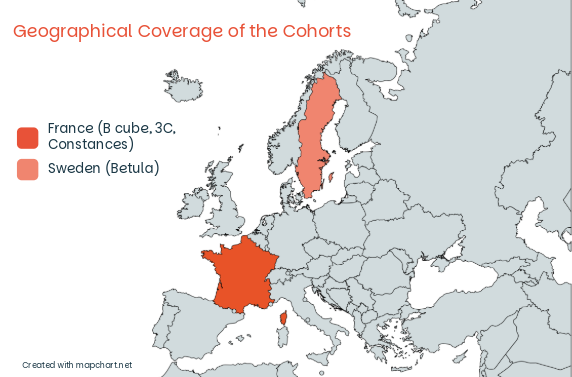
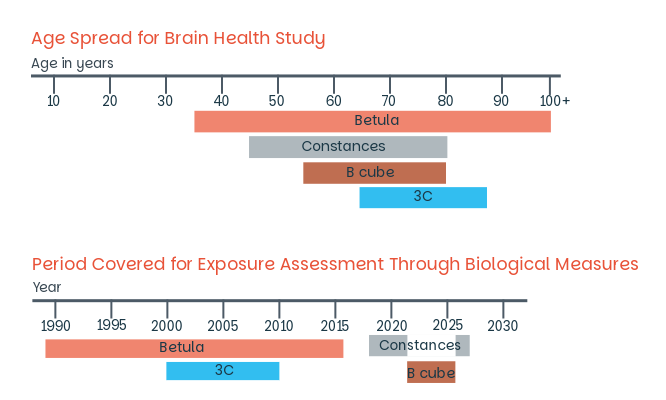
The epidemiological data comes from four existing cohorts, three in France and one in Sweden: Biobank and Brain Health in Bordeaux (B cube), Constances, the Three-City (3C) study and Betula. This provides the consortium with access to data from over 3,500 participants, including up to 30 years of follow-up on cognition and the incidence of neurodegenerative diseases, as well as approximately 10,000 biological samples. The cohorts also offer complementary data on age, geographical coverage, period, cognitive and clinical investigations, biobanks, and socioenvironmental diversity.
New hair collection is being undertaken in Constances as part of the ExpoSignalz project. B cube, 3C and Betula already have these samples in storage.
Why are longitudinal studies so important for health research?
The principle of a cohort study is to initially collect a large amount of information on people who are healthy, or at least who do not have the disease being studied—in this case, Alzheimer’s disease—and then follow participants for several years. Over time, some will develop diseases.
By comparing the initial characteristics of people whose cognitive performance did not decline with those of people who developed Alzheimer’s disease, alongside pollutants found in biological samples from those people, researchers can then identify risk factors. This then allows preventative measures or other actions to be recommended.
The Four ExpoSignalz Studies
Biobank and Brain Health in Bordeaux (B cube)
B cube is a new generation population-based cohort study established to examine the determinants of brain ageing in the early stages, using molecular epidemiology. There are 2,006 participants in the study, aged between 55 and 80 years old, living in the Bordeaux area of France.
Data in the first phase of the B cube study was collected between 2022 and 2025, and the study is now in its first follow-up phase. This is being conducted as part of the ExpoSignalz project and adds pollutant biomarkers and brain endpoints to the cohort’s neuroimaging, comprehensive biobank and exposomics data.
Three City (3C) Study
The 3C Study is a longstanding population-based cohort study focused on understanding the relationship between vascular risk factors and dementia in people aged 65 years and older. Between January 1999 and February 2001, a total of 9,294 participants were recruited from three French cities: Bordeaux, Dijon and Montpellier, randomly selected from electoral lists.
The participants in Bordeaux were followed for more than twenty years, until 2023, while the follow-up in the other centres was shorter—up to 12 years in Dijon and 15 years in Montpellier.
Cohort of Consultants from Health Examination Clinics (Constances)
Constances is a large multi-purpose prospective population-based cohort, functioning as a research platform. Constances aims to provide the research community with a resource to address and answer research questions regarding health and its determinants, including but not limited to ageing and environmental health. Constances includes 220,000 adult participants randomly selected between 2012 and 2020 from those registered with the French national security system (over 85% of French residents are registered). Participants were aged between 18 and 69 years at inclusion with a balanced sex-ratio (54% of women) and diverse socio-occupational categories. Geographically, participants are spread across France in both urban and rural areas, with an 80-20%, in line with the French population.
Constances’ participants completed detailed questionnaires at inclusion and underwent a health examination by clinicians. This includes a cognitive survey for participants aged 45 and over, annual follow-up questionnaires, and repeated health assessments every four years.
Betula
Betula is a longstanding population-based cohort study on ageing and dementia which has been running for over 35 years. The main objective is to study how memory functions change during adult life and old age, to identify risk factors for dementia and to identify early preclinical signs of dementia.
The cohort includes 4,425 participants, who were over 35 and up to 80 years of age at inclusion in 1988, living in Umeå municipality, a city in northern Sweden. It now spans adulthood to age 100+, with longitudinal assessment of dementia, cognition and neuroimaging. Cohort participants have been tested, interviewed and examined medically on up to six occasions, approximately every five years between 1988 and 2014. Participants have subsequently been followed through healthcare and national registers, capturing diagnoses, medications, and socio‑demographic information.
The cohort gets its name from Umeå, called the city of birch trees: Betula is Latin for birch tree.