ExpoSignalz Annual Consortium Meeting
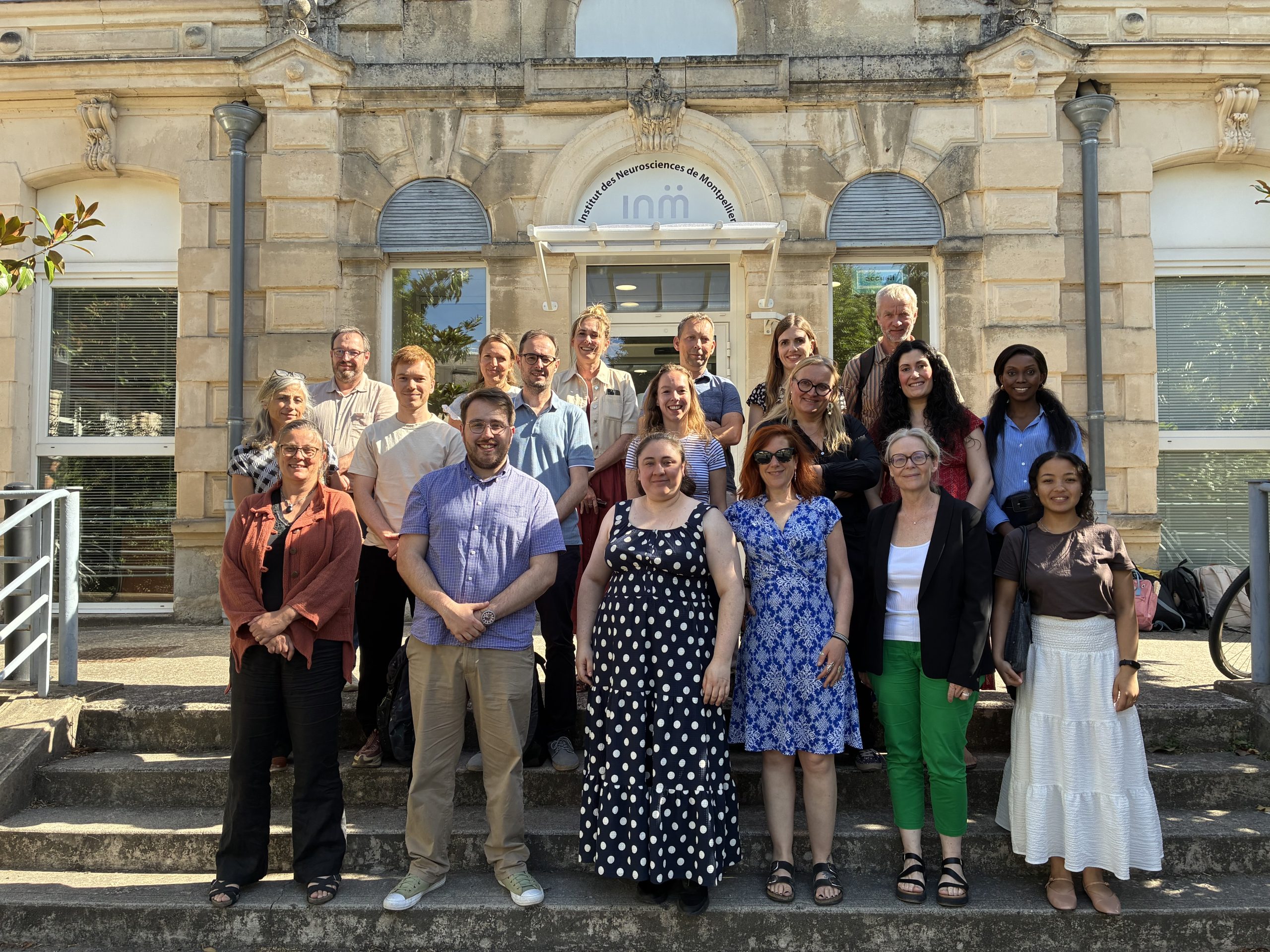

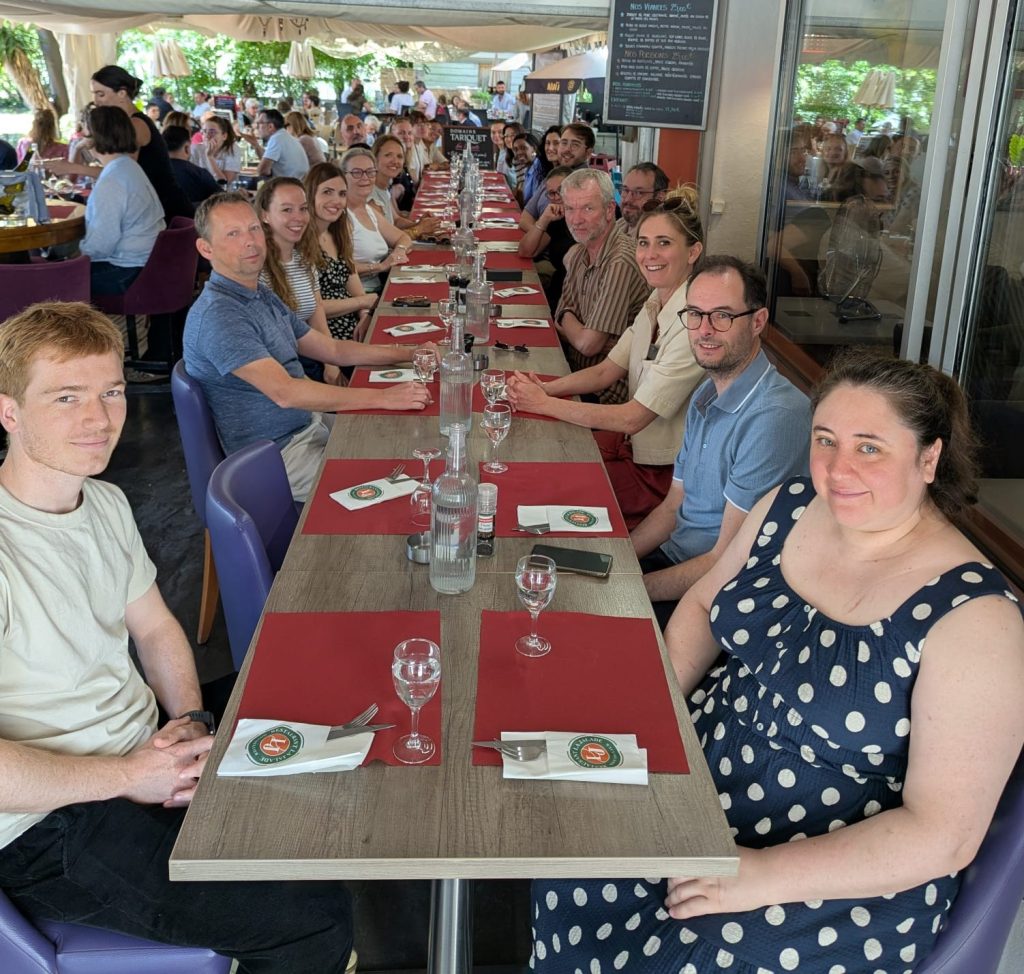
Between the 10th and 11th of June 2026, the ExpoSignalz team gathered in Montpellier for our annual meeting to discuss our progress so far, our plans for the following year, and to catch up with each other.
Hosted by Inserm, our Annual Consortium Meeting took place at the Institute for Neurosciences of Montpellier (INM), attached to the Hôpital Saint-Eloi.
What has ExpoSignalz been up to?
The project has been busy over the past 14 months since our kick-off in April 2025.
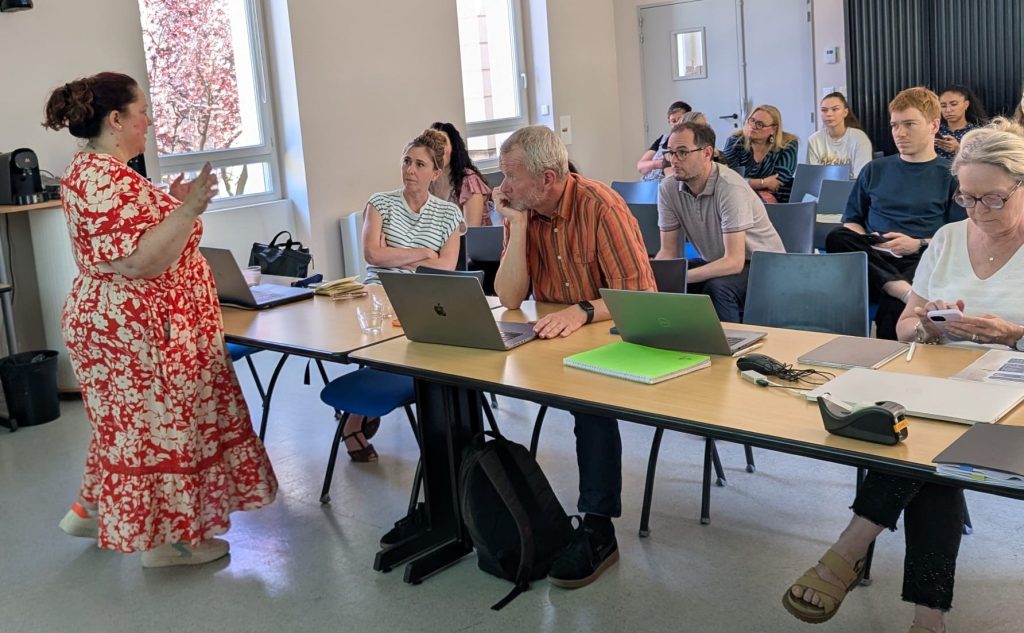
During the meeting, each work package leader delivered a short overview of their research so far. This allowed the other members of the ExpoSignalz consortium to discuss their findings, share resources and ideas, and plan future collaborative work.
Much of the work done is still in the early stages, but we are starting to see some promising and convincing results.
Good progress has been made on screening and prioritising chemical pollutants. Of the 67 selected pollutants being investigated by ExpoSignalz, 63 have already been screened using four different in vitro and in cellulo assays, allowing us to rank the most neurotoxic and more pro-aggregative ones. Alongside this, the team has reviewed the literature on these selected pollutants, exploring if any studies have identified the mechanisms by which these chemicals can cross the blood-brain barrier and potentially reach the brain.
In parallel, the screening of pollutants in biological matrices from human epidemiological cohorts has already begun. Initial results have been obtained from the B-Cube cohort, in which a wide range of pollutants were analysed in blood and hair samples. The objective is to identify potential chemical signatures associated with cognitive decline and predictive of neurodegenerative trajectories. Although these findings are still preliminary, the analyses revealed a remarkable diversity of chemicals detected across individuals, as well as a wide range of concentrations.
This work will help identify which chemicals accumulate in the human body under real-world exposure conditions. It also highlights that individuals are rarely exposed to a single pollutant; rather, they are exposed to complex mixtures of chemicals, the composition of which can vary considerably between individuals and communities.
We also had updates from the 3-City cohort regarding work previously published by the Bordeaux partner. Their results showed that higher blood levels of certain persistent organic pollutants (POPs) are associated with greater cognitive decline and increased brain atrophy, but only in individuals carrying the ApoE4 allele, a well-established genetic risk factor for Alzheimer’s disease.
Inserm provided overviews of the ExpoSignalz work on mouse models: both preclinical models of Alzheimers’ disease and prenatal exposure models to track the effects of chemicals on the pathophysiology of Alzheimer’s disease and neurodevelopment, as well as early behaviours. Additionally, ExpoSignalz researchers are using stem cells to grow models of 2D and 3D neural networks, allowing us to investigate how pollutants can affect the growth of neurons in our brains.
Panos Zanos, from the University of Cyprus and the newest member of the ExpoSignalz consortium, introduced the work his team will be doing to analyse how pollutants can impact ‘circuit dysfunction’ in our brains, on a neuronal network level.
Finally, we discussed our dissemination activities and participation in international meetings, as well as our contribution within the ExpoHealthNet cluster. This session also included an interactive ‘Mentimeter’ session on the project’s key expected outputs, which could be used in research or to inform policy.
What’s next for ExpoSignalz?
Over the course of the next 18 months, we’ll be focused on our next set of deliverables and milestones. As well as new publications, we’ll be launching the ExpoSignalz toolbox, a platform for all the tools and methods we’re developing throughout the project. We hope to have exciting developments to share focused on everything from neuronal and mouse models, completing the cataloguing of chemical pollutants, setting up a policy advisory panel, hosting our second webinar and a first in-person policy engagement workshop. All of this is important in ensuring our work has an impact beyond the immediate lifetime of the project.
Here’s to another year of excellent science and collaboration!